Lisbon- the city of colors and light

What can a person say about Lisbon that hasn’t been said before? I guess it’s hard for every blogger to think about thousands of posts and photographs on the same subject, and to try to write original content, something that will intrigue the reader.

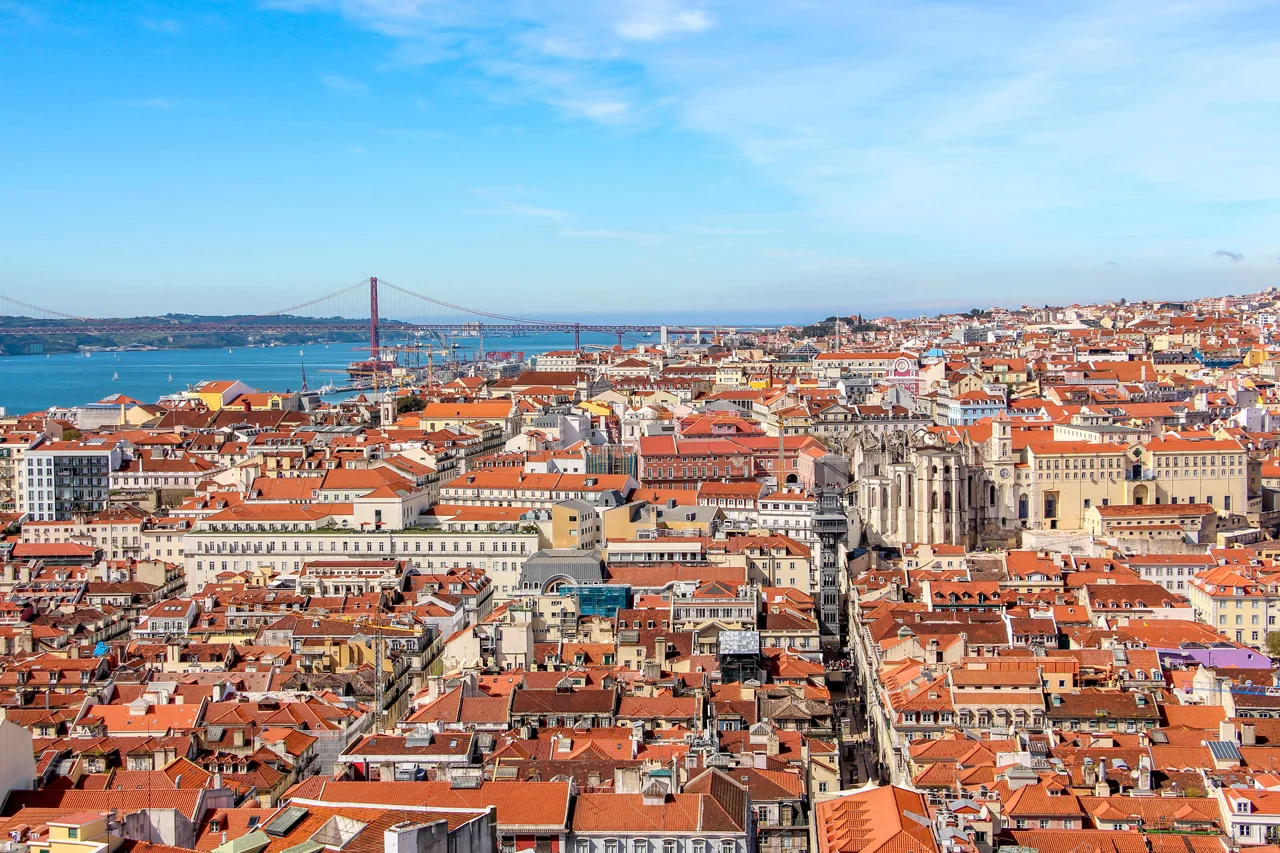
The view of the city from Castelo Sao Jorge

The view of the city from Castelo Sao Jorge

As there are many great posts and ultimate guides to this astonishing yet quirky city, I am going to write just my personal experience, accompanied with bunch of photos!

It was a long winter and after a hard battle between Iceland and Portugal, we decided to flee to the south, with the first signs of spring. By the time the first buds appeared we longed for the sun, longer days, warm climate and light food.

Soaking up the sun and the views of Alfama

Soaking up the sun and the views of Alfama

We landed in Lisbon by night, greeted by strong wind and a heavy shower. The broad avenues were magnificent even by night, our neighborhood was scented by beautiful jacaranda trees and on our first dinner in Portugal I ate (without knowing what I’m ordering) a delicious, heartwarming soup which turned out to be made of tripes! And that's what's traveling is about- it makes you step out of your routine and comfort zone and provides you with new experiences, something that you normally wouldn't experience at home.

Jacaranda trees in March (I would love to see them in full bloom in the early summer when they color the city purple!)

Jacaranda trees in March (I would love to see them in full bloom in the early summer when they color the city purple!)

Due to time difference, we woke up early in the morning which gave us enough time to explore the city a bit, before heading to Ėvora and Algarve for a few days.

Followed by a recommendation on the lovely Eating the World blog we went to Pastelaria Versailles, which was fortunately located about 5 minutes from our apartment- this old style cafe imitates the grandeur of the palace of the Sun King in a very charming manner- the waiters are extremely polite, the place is filled with locals having their breakfast, and the selection of sweets is so wide that if it weren’t for Lisbon's signature sweet Pasteis de nata, one would have difficulties choosing!

Cafe-Versailles
Breakfast at Cafe Versailles

Breakfast at Cafe Versailles

After breakfast we browsed a little around the Avenida da Repùblica and the thing that amazed us the most was the light- everything was so bright, the sun shined intensively, the air was- airy, and the ocean wind was omnipresent.

Another great coincidence was that the Museu Gulbenkian was also in our neighborhood, and we had just enough time to visit it. We expected a nice collection, but we didn’t expect amazing gallery space with large glass walls that open up to the greenery of the garden and almost look like a picture on its own, admirable collection which contained art pieces from Egyptian figurines and medieval manuscripts to impressionists and wonderful secessionist jewelry by René Lalique and a nice museum shop. One more thing- there are no crowds and waiting in lines for the masterpieces in this museum, one can really take some time to sit, enjoy, contemplate, relax in this amazing space!

Museu-Gulbenkian-Lisbon
Renee-Lalique
Museu Gulbenkian was one of great surprises of this trip!

Museu Gulbenkian was one of great surprises of this trip!

Before heading to Ėvora we had a quick lunch in the restaurant called A parte, also in the neighbourhood- apart from having unusual and charming interior, this restaurant also makes the best salad I’ve ever tasted- out of green salad, grilled prawns, fresh mango and caramelized nuts! Yum!

Lunch at A parte restaurant

Lunch at A parte restaurant

The view from our apartment in Alfama

The view from our apartment in Alfama

We returned to Lisbon after a few days spent on the wild coast of Algarve, and the first impression of the city was so good that I could not wait to come back. We found an apartment in the old quartier of Alfama, in a steep narrow street adorned with many plants- for some reason, every tourist group and tuk tuk stopped to take a photo of that exact street, we never found out why!

Alfama-streets
Colorful streets and lovely details of Alfama

Colorful streets and lovely details of Alfama

A minute walk from our apartment was a wine bar called The Corkscrew where we had dinner on all the three nights we spent in Lisbon. So in a street renowned for its fado restaurants, we listened to jazz music, eating punchy Portuguese cheeses and drinking wine. This restaurant makes few dishes, but they are prepared from scratch, in front of you, and their bartender style steak and flambeed pancakes are to die for!

One of the lovely evenings spent in the Corkscrew wine bar

One of the lovely evenings spent in the Corkscrew wine bar

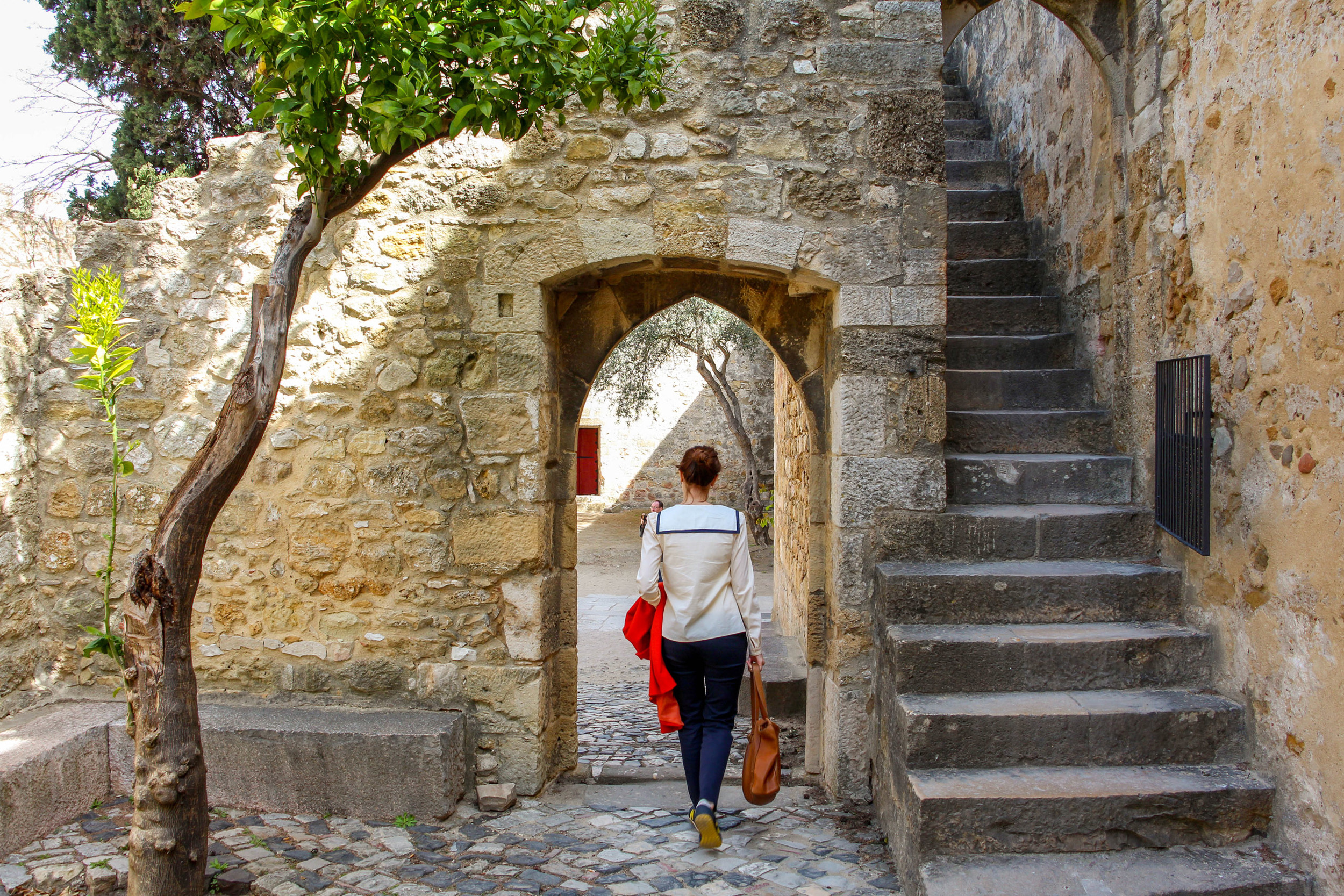
Since we had only two days left in Lisbon we decided to make the best of it and take at least a peak of every of the old neighborhoods. We started in Alfama, climbing up to Castelo São Jorge for some incredible views of the sunbathed city- there were lots of tourists wandering around its ancient walls, but the funny thing was that we kept bumping into the same people on different parts of the city, as if we were in a small one :D

View-Castelo-Sao-Jorge
View-of-Baixa
Castelo Sao Jorge- spectacular views and medieval architecture

Castelo Sao Jorge- spectacular views and medieval architecture

The Ponte 25 de Abril red bridge which dominates the scene reminded me of the Golden Gate bridge in San Francisco, and although I’ve never been to SF, I got the impression that these cities are alike- from the bridge, to the hilly neighborhoods, old school trams and the jacaranda trees.

Passing the Ponte 25 de Abril bridge on our way to the Alentejo region

Passing the Ponte 25 de Abril bridge on our way to the Alentejo region

We did visit the cathedral (Sé) in Alfama, but otherwise, we just strolled up and down the hilly neighborhood, both amazed by the lovely alleys and tile adorned houses and surprised by many abandoned, run-down buildings and dirty corners. The lovely thing is that the whole neighborhood echoes the song of many singing birds that the residents keep on their balconies! I loved the colors of the city- colorful tiles, painted façades, red and yellow trams, adorned traffic signs and intensively blue skies!

Alfama-street
Tile adorned houses and red trams- Lisbon is such a photogenic city!

Tile adorned houses and red trams- Lisbon is such a photogenic city!

We followed the red tram line to the neighborhood of Baixa, but I'll have to write another post about the rest of our stay in Lisbon, as I have too much to say and to show to fit in just one post! In the meantime, I would love to hear your Lisbon experiences and maybe some recommendations for the next visit! 

Streets-of-Alfama

12 delicious Sicilian foods (that are just the tip of the iceberg)

Sicily is all about food. We went to Sicily this summer for our honeymoon, and spent a high percentage of the time eating! Local cuisine picked the best from every conqueror that governed this island, and now is a delicious mixture of Italian cuisine and Arabic influences. Sicilian sweets are considered to be the best in Italy, but there are also fresh seafood, pasta, and all sorts of fruit and vegetables that thrive on the islands fertile soil under the hot Mediterranean sun.

I made a list of 12 foods I tried and liked the most, but in reality, the list is quite longer, and the comment block below is just waiting to be filled with your ideas and picks on this topic!

Here they go:

1.      LEMONS&ORANGES- Warm climate with loads of sun during the entire year is the reason for such abundance of citruses. Sicilian blood orange ( Arancia Rossa di Sicilia ) is a an indigenous sort, which has a protected geographical status. Lemon and orange trees grow literally on every corner of Sicily. We saw abundant orange trees with ripe oranges falling on the ground on bus stations and no one even picked them up! We had a big lemon tree in the garden of our apartment in Modica, and brought a bunch of lemons back home in a suitcase. One of the most popular lemon products is limoncello- a sweet and sour liquer made of lemon zests!

Freshly pressed lemon juice on our lovely terrace in Modica

Freshly pressed lemon juice on our lovely terrace in Modica

2.      CAPONATA- traditional Sicilan dish made of aubergines and tomatoes (melanzane e pomodoro). As any kind of stew, the longer it cooks, the better it gets! One of the best I’ve had was in the Sicilian restaurant in Berlin! Who would have guessed, right?

3.      GELATO- Italy is a land of gelato, but Sicilian gelato is something special indeed. Introduced by Arabs, first Sicilian gelato was made with snow brought from the slopes of Mount Etna to the nearby towns. Secret to its quality? It has a less percentage of cream comparing to those of other countries. There are numerous sorts of Sicilian gelato, but the pistacchio sort was the tastiest I’ve tried. Gelato with brioche is a typical Palermitan dish, and the locals say that you can’t leave Palermo without trying it- one more reason to go back to Sicily! 

Enjoying the best gelato on the main square of Zafferana Etnea

Enjoying the best gelato on the main square of Zafferana Etnea

4.      CANNOLI- crispy tubes filled with fresh ricotta and often dipped in candied fruit, pistacchio or chocolate. The tastiest ones are filled minutes before serving, and could be eaten for breakfast, as a dessert after lunch or dinner- practically any time is a good time for cannoli!

Cannoli for breakfast from Dolceria Bonajuto in Modica!

Cannoli for breakfast from Dolceria Bonajuto in Modica!

5.      GAMBERO ROSSO- as big as scampi and as delicious! It is a typical Mediterranean species of prawns with a specific taste. Served with pasta, as a main dish or antipasti, seafood lovers (like me) could not get enough of it. On our first evening in Cefalú (and on Sicily) we found a great restaurant which served this pasta with gambero rosso- it was sooo delicious!

Pasta con gambero rosso in the La Brace restaurant

Pasta con gambero rosso in the La Brace restaurant

6.      PASTA CON LE SARDE- traditional Sicilian pasta dish, (usually) made of spaghetti with sardines, fennel, raisins, pine nuts and saffron. Arabic influences can be tasted in its aromatic mixture of sweet and salty, and since it’s one of the signature dishes of Sicilian cuisine, you shouldn’t leave Sicily without giving it a try!

I enjoyed this flavoury meal on every ocasion I could and this photo was taken in a restaurant in Taormina

I enjoyed this flavoury meal on every ocasion I could and this photo was taken in a restaurant in Taormina

7.      ARANCINE- fried rice balls with all sorts of fillings, such as meat ragu, mozarrela and prosciutto or tomato sauce. They are crisp on the outside, soft and gooey on the inside, and a great street food option for a quick meal! The name comes from its shape and color that resembles the orange.

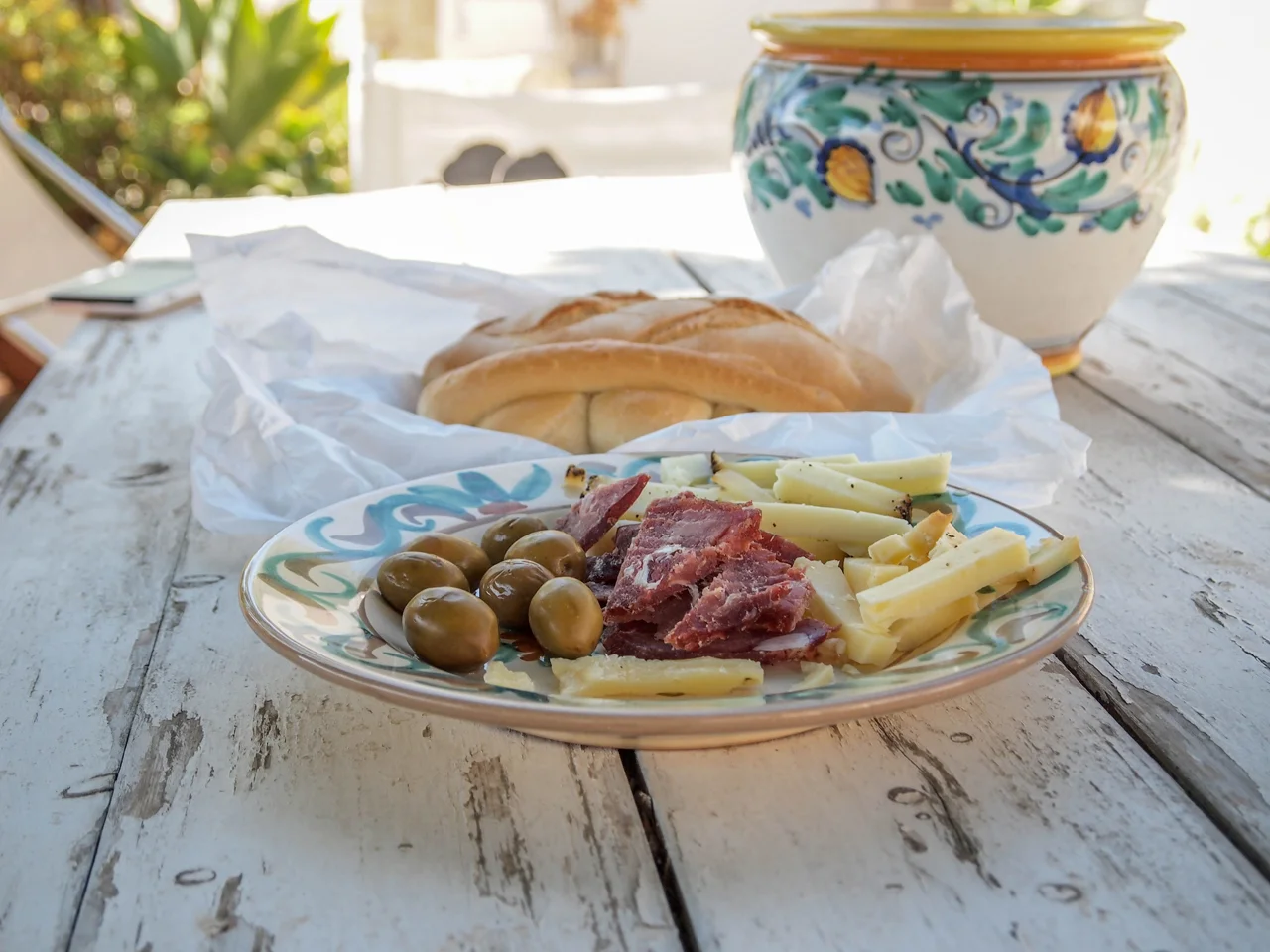
8.      SALAMI&CHEESE- In every restaurant where we ordered a cold starter we got excellent sorts of local cheeses and salami. Sicilians are very proud of their own products, and most likely are going to informe you about the region of origin of the served food. I particulary liked the pecorino with peppercorns and the salami with pistacchios!

Breakfast on our terrace in Modica- this place was truly divine!

Breakfast on our terrace in Modica- this place was truly divine!

9.      PESTO DI PISTACCHIO- Italy is known for its great pestos which can be used in pasta dishes or bruschettas, and Sicily is known for pistacchios. Logical combination? – Sicilian pesto di pistacchio. I’ve tried it in deferent pasta combinations and it’s delicious! This one was made especially for us, on a farm below the town of Petralia Soprana- we sat on the terrace and watched the cook picking the mint leaves and then blending them with pistacchios- it really couldn't get any fresher than that!

Pesto-Di-Pistacchio

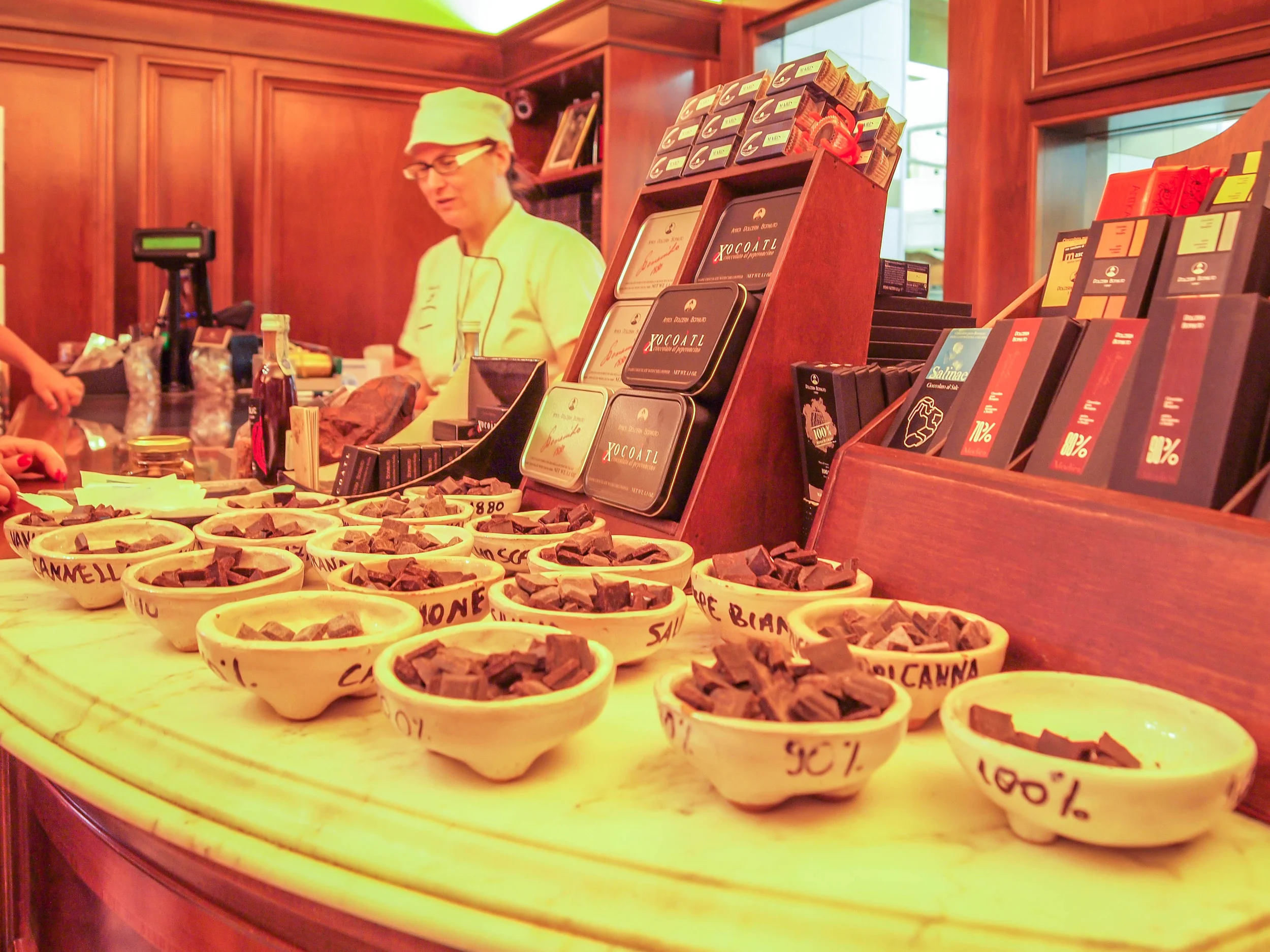
10.   CHOCOLATE- for chocolate enthusiasts, the town of Modica is the place to be! There are many chocolate shops in the town, but the most famous is the one runned by Bonajuto family since the year 1880. The quality of their chocolate relies on the ancient Aztec recipes, brought to Sicily by Spaniards. Chocolate is made of cacao beans with granulated sugar which gives this chocolate its peculiar taste, and you can choose from all sorts of flavors such as white pepper, salt, orange, nutmeg, chilli pepper...

Chocolate tasting in Dolceria Bonajuto- most of our souvenirs were bought here! :)

Chocolate tasting in Dolceria Bonajuto- most of our souvenirs were bought here! :)

11.   PASTA NORMA- another typical Sicilian pasta dish made with aubergine, tomato, basil and salted ricotta. Like Pasta con le Sarde, can be found on every restaurant’s menu and there is really nothing not to like regarding this dish! The one below was served with gnocchi instead of pasta- both versions are delicious!

Pasta Norma in the lovely resturant called Osteria dei Sapori Perduti in Modica

Pasta Norma in the lovely resturant called Osteria dei Sapori Perduti in Modica

12.   BISCOTTI DI PASTA DI MANDORLE- I’ve tried this soft almond cookies in Sicilian Restaurant in Berlin (again!), but if you’re going to Sicily, do not miss them out! Forget about dry crispy cookies- these have almost creamy texture and you will not get enough of them!

I am aware that this is the worst photo I published so far, but what was I supposed to do when the cook came out of the kitchen with a freshly baked platter of this deliciousness? I took one quick photo with my mobile phone before they disappeared b…

I am aware that this is the worst photo I published so far, but what was I supposed to do when the cook came out of the kitchen with a freshly baked platter of this deliciousness? I took one quick photo with my mobile phone before they disappeared back in the kitchen. :)


A day in Pula

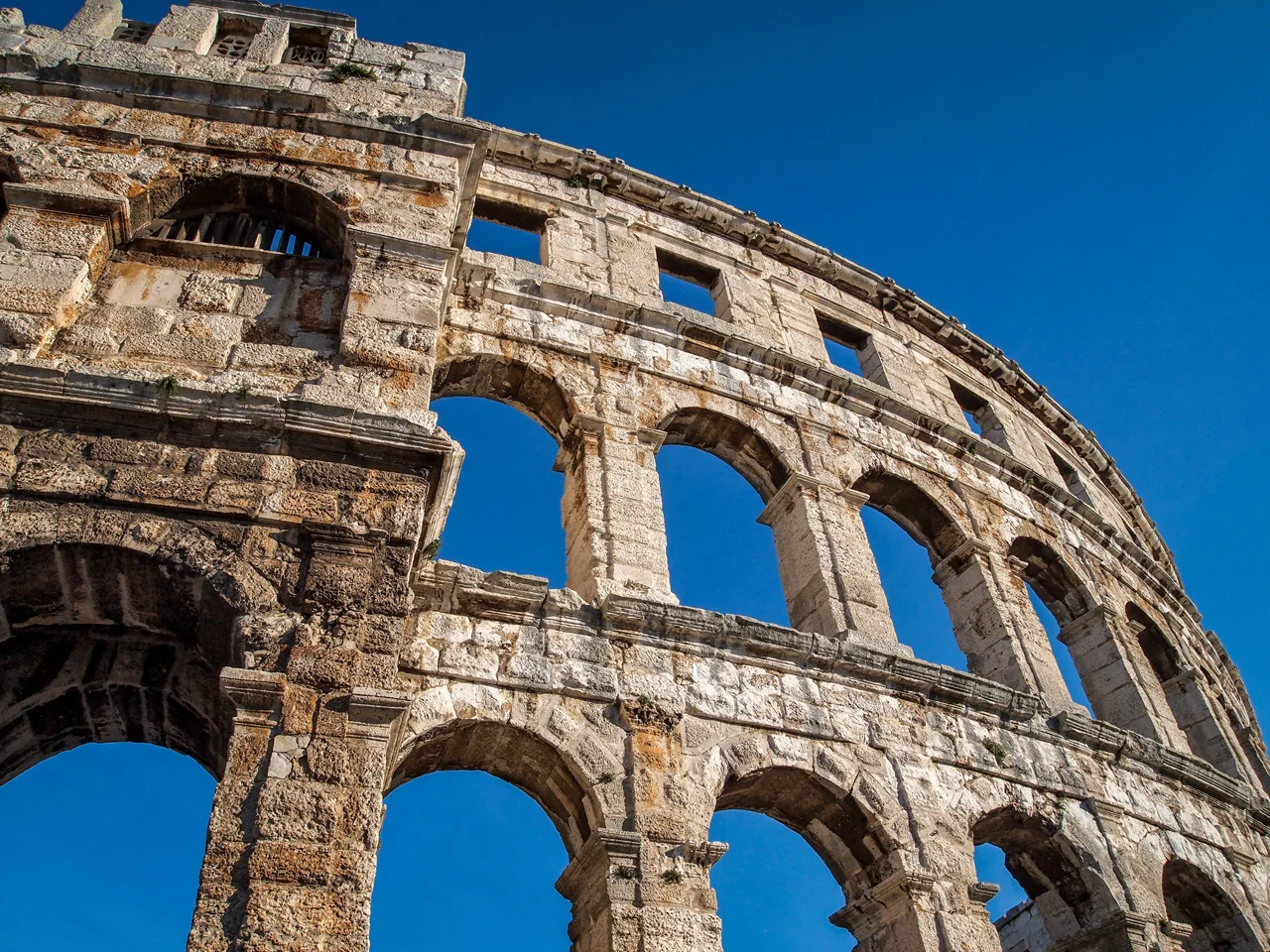
1. Pay a visit to Arena- Colosseum in Rome is the most popular Roman amphitheater, but Pula got its own magnificent version, the well preserved Arena. You can visit during daytime and admire centuries old architecture or even better, attend a concert or watch a movie under the stars with the sea as a background. Pretty awesome, isn’t it? 

Arena-Pula

2. Try out some fresh local products at the Market- the building was erected in 1903 as an architectonic wonder of glass and steel, a first of its kind in this area. Today, you can buy fresh fish and meat in the ground floor, have a cup of coffee on the upper floor and enjoy the colors and smells of local fruits and veggies under the shade of chestnut trees in front of the building. -Be sure to find typical Istrian specialties such as wild asparagus or truffles!

Pula-Market

3. Have a drink on the main square called Forum- pick a terrace with the best view and admire the 23 centuries old Augustus temple and the medieval city hall. We usually sit in the bar called Cvajner as it has artsy vibe and a decent collection of beer and schnapps.

Forum-Pula

4. Take a walk on the Verudela peninsula- gifted with dense pine wood, beautiful waterfront and Havajska beach (Hawaiian beach- presumably thanks to the turquoise color of the sea), it’s a great place for a family day trip, morning run or relaxed evening walk. There is also the Aquarium Pula, a fun place to visit with kids (don’t expect anything big or fancy, but do expect  serious amount of cuteness as it is a shelter for injured sea turtles).

Verudela-Pula

5. Find out which exhibition is at display in Sveta Srca- this former church is beautifully restored and adapted to exhibition space few years ago. It regularly hosts interesting exhibitions, from mind blowing contemporary installations to artifacts from ancient Istrian past.

Sveta-Srca

6. Stroll under the “Golden gate”- the triumphal arch of the Sergi is a Roman monument from 1st century BC and was one of the city gates of ancient Pula. It is situated on the Portarata square where many concerts and events are being held in the summer months.

Zlatna-Vrata

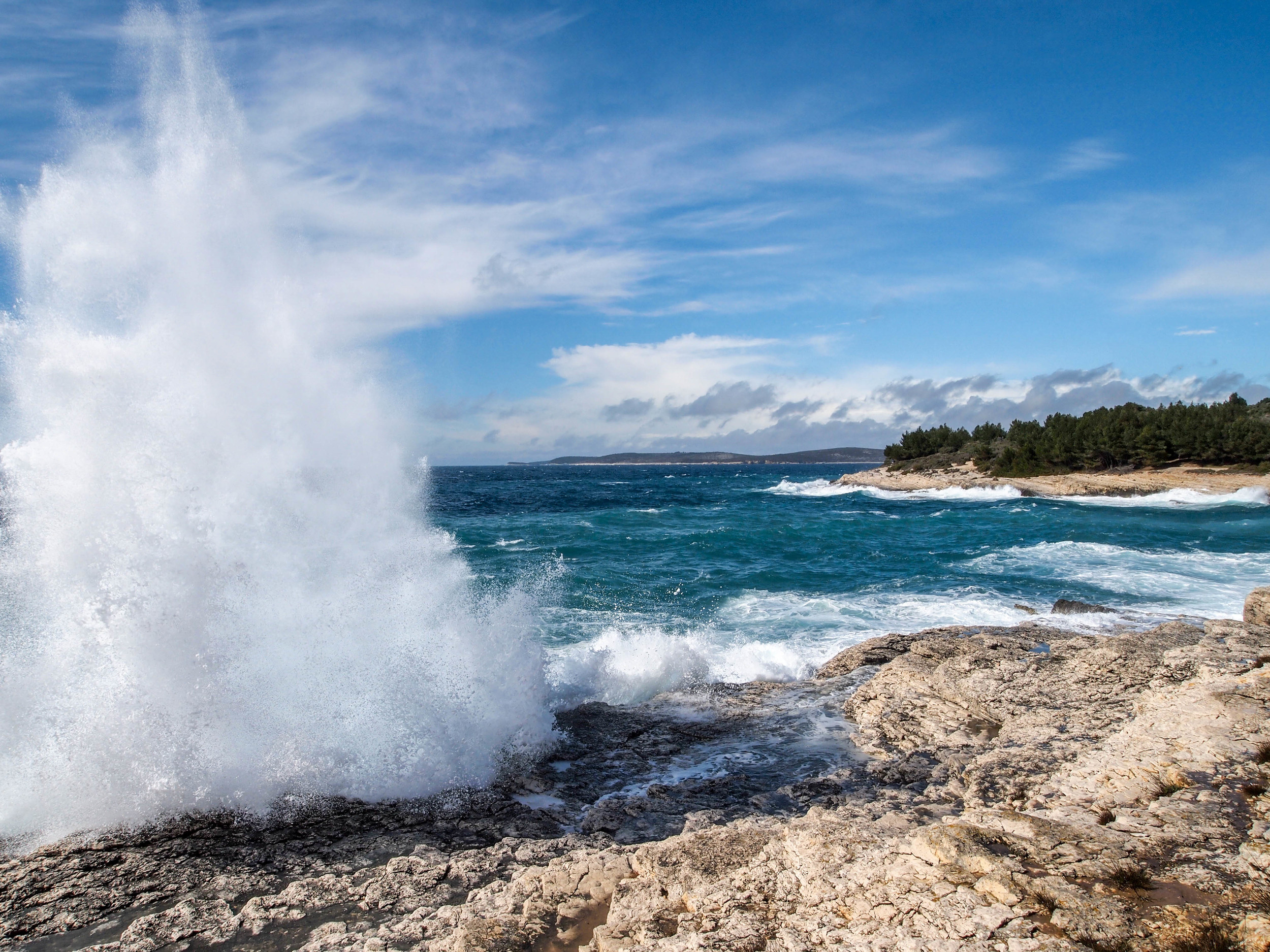
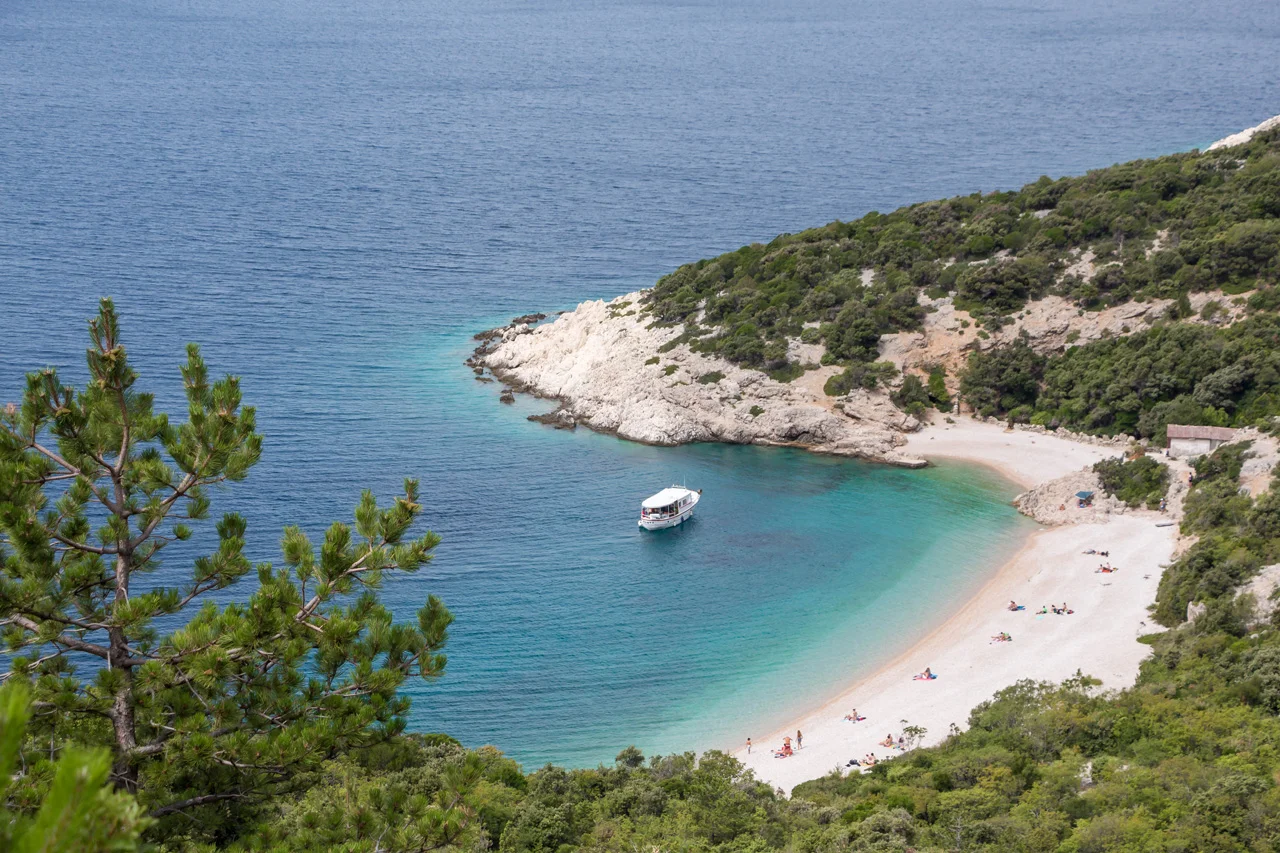
7. Make time for a day trip to Cape Kamenjak- this beautiful protected landscape has more than 30 bays with crystal clear water, stunning rocky waterfront, scented pine woods and a variety of plant and butterfly species. You can take a walk or a bicycle ride through its marked pathways, or sign up for surfing school in the Skoljic bay. At the end of a day, have a drink in the peculiar setting of Safari bar- a one of its kind, it will thrill your inner child!

Cape-Kamenjak

8. Visit the Naval cemetery- if you’d like to have a little time for yourself in a peaceful ambient, this might be the perfect place, as the 19th century cemetery has a beautiful park with giant cypress trees and relaxing background music of singing birds in the treetops.

Pula-naval-cemetery

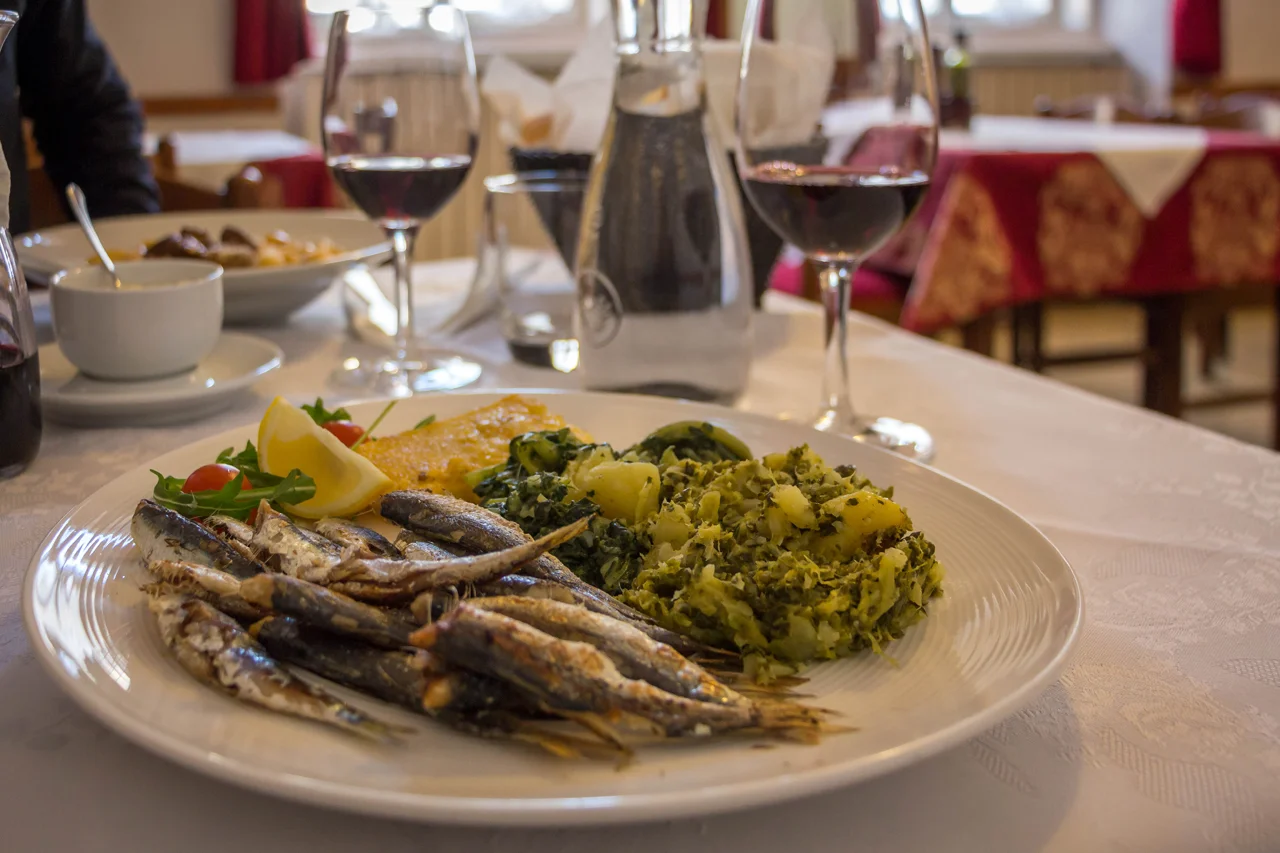
9. Taste the lstrian specialties at Trattoria Vodnjanka- this simple, family run restaurant serves delicious dishes made out of local ingredients in a way Istrian nonna would have cooked it! Regardless if you prefer meat or fish, everything they serve is just spot on!

Trattoria-Vodnjanka

10. Enjoy the view of the Lighting giants- when the night falls, on the hour every hour the cranes of the shipyard Uljanik lighten up in a colorful scheme. The project was made by an inovative designer from Pula, and this light show quickly became one of main tourist attractions! You'll get the best view from the boardwalk and the main dock.

Lighting-Giants-Pula

Picture perfect cities: Rovinj

Rovinj is one of my favorite cities in the world. My connection with it dates back to my early years as my grandparents used to live there, and I used to spend my school holidays with them. I loved it then as much as I love it now, and some of my best childhood memories belong to that period.

The scenes are still vivid: sunny breakfasts on the terrace (with grandma's fresh tomatoes!), hours spent on the beach (and my first, unsuccessful attempts of diving), the excitement of attending the local feast called “Rovinjska noc” (Rovinj’s night), city walks with my mum (and inevitable visit to my favorite paper store), drinks in a bar on the rocks overlooking the sea…

Rovinj-Croatia
Rovinj-Port
Istria-Rovinj

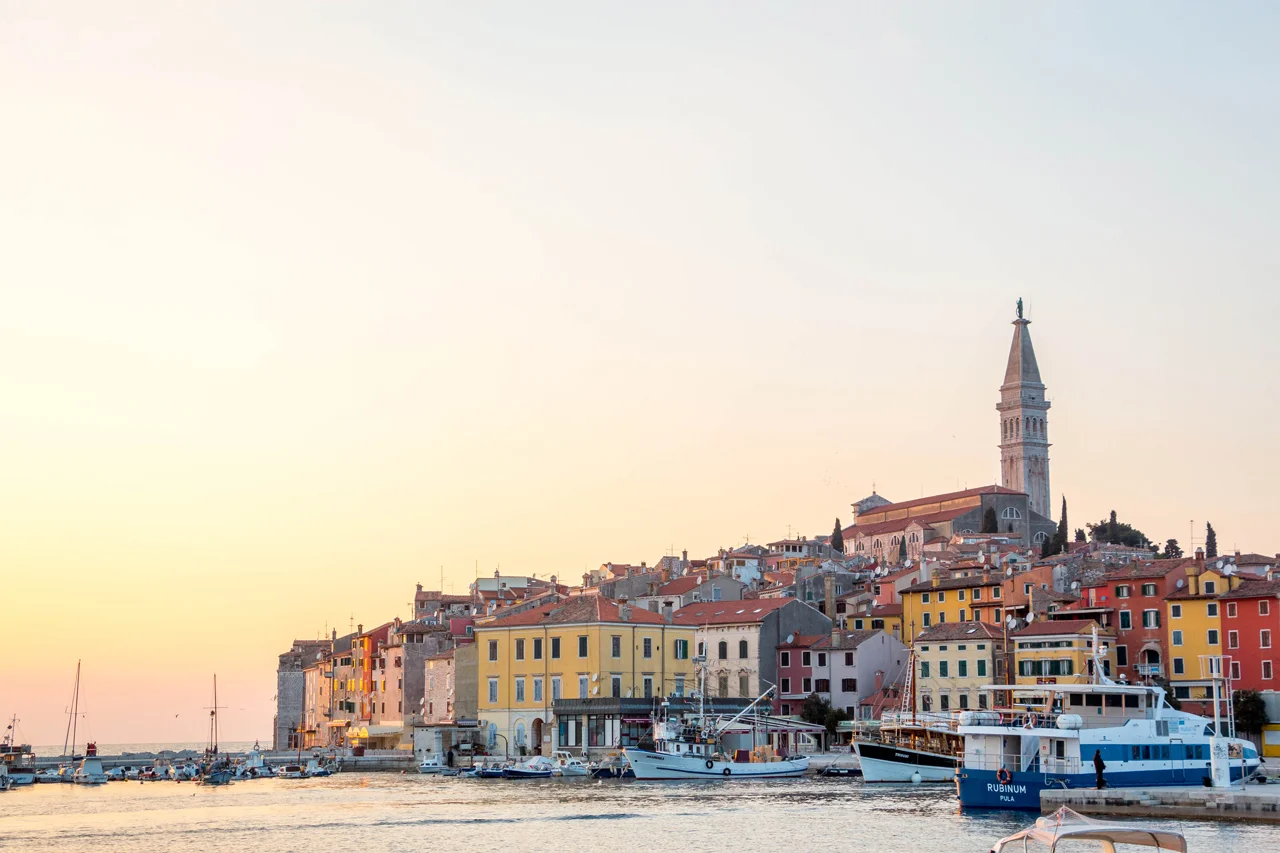
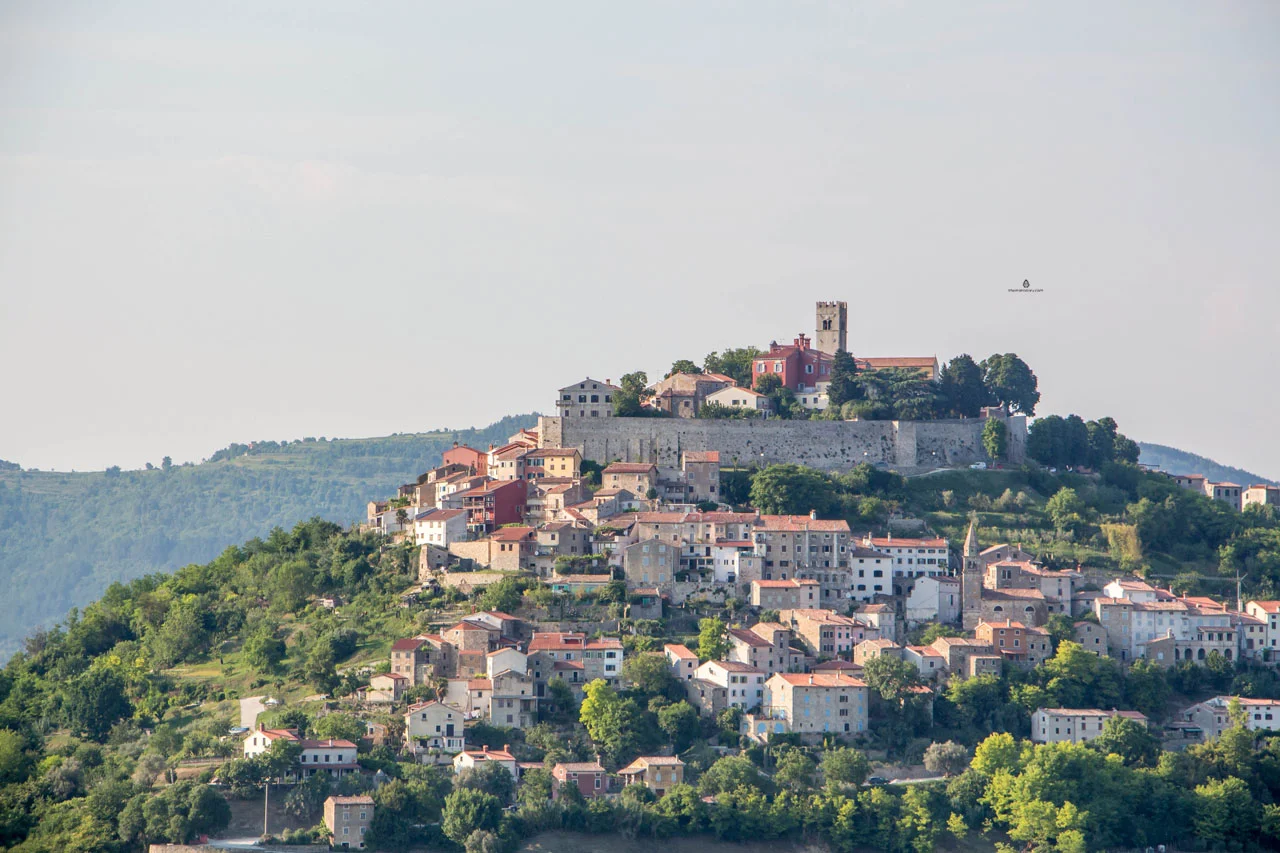
The old part of the city is situated on the peninsula with a church on top which dominates the whole scene. Every angle of Rovinj is a beautiful picture on its own- colorful leaning houses, narrow streets with laundry hanging on the strings between the windows, lively fishing port and marine with luxurious yachts, beautiful sea view from the square in front of the church...

Rovinj-Istria
Rovinj-colorful-houses
Rovinj-Old-City

Few times a year we like to treat ourselves with a day trip to Rovinj, where we usually follow our favorite routine. Before taking a walk we grab something sweet (either ice cream or chocolates in the “Kraš” store). I like wandering through the narrow stone paved streets filled with workshops- some of them sell nice local souvenirs and jewelry, some of them are pure kitsch, but there’s something for everyone’s taste. We always climb up to St Euphemia church on the top of the city and enjoy the view and the sea breeze.

Rovinj-city-walk
French-bulldog
Rovinj-colorful-houses

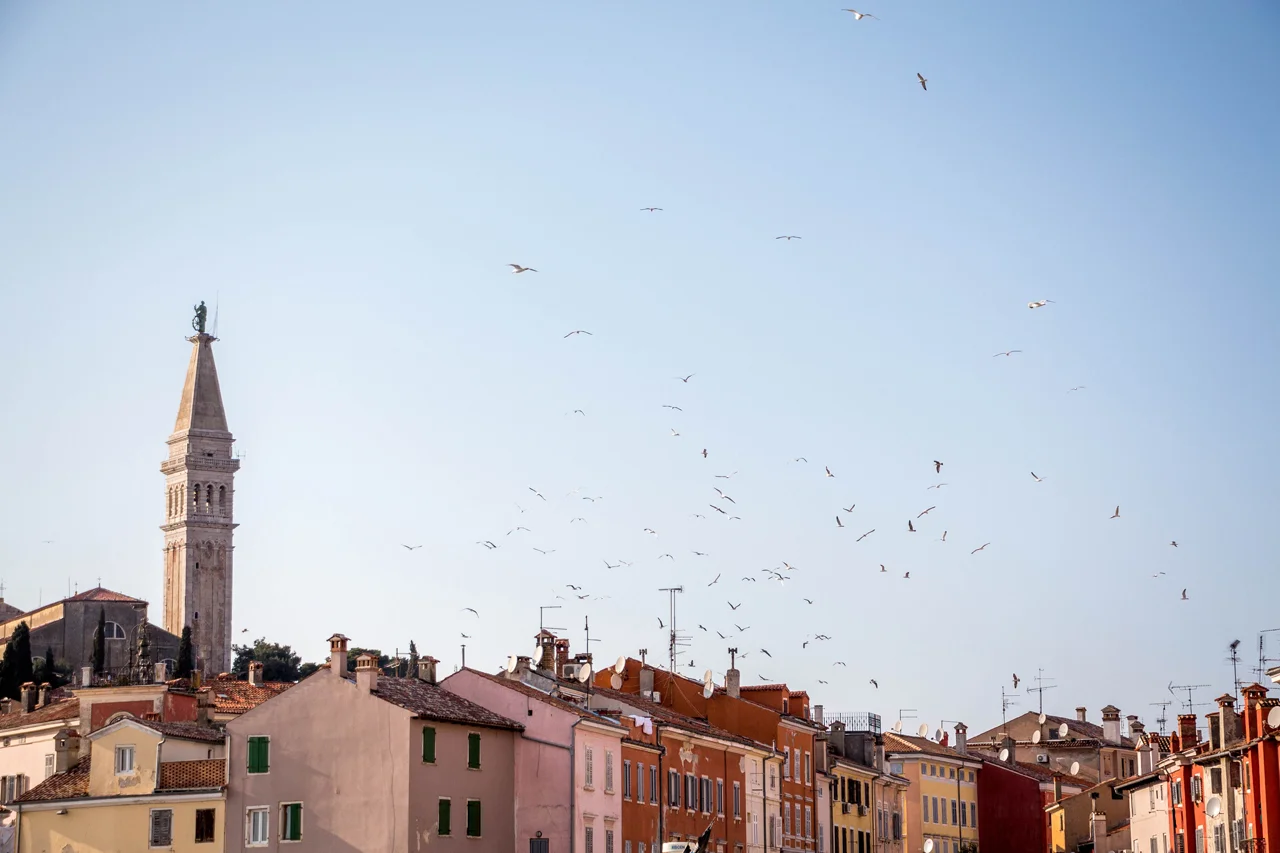
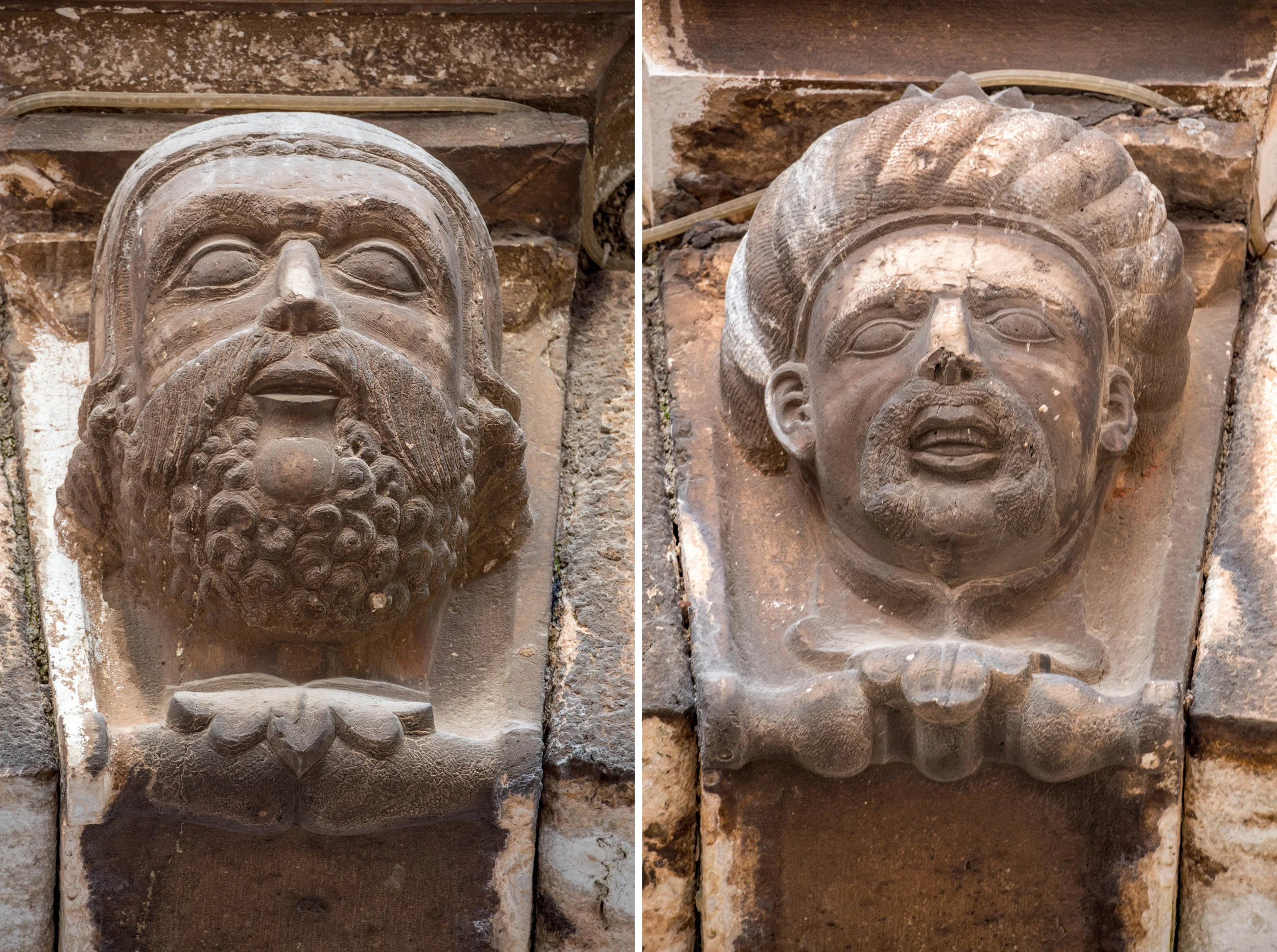
St Euphemia was a Christian martyr who lived in the city of Byzantium (nowadays Istanbul) in the 4. Century A.D.  where she was tortured and died from injuries under the emperor Diocletian (the same one that had built the famous Diocletians palace in Split!). According to local legend, the sarcophagus with her remains disappeared from Byzanthium on a stormy night, and landed on the shore of the city of Rovinj. Since then, St Euphemia is a patron saint of the city, and the church tower bears the sculpture of the Saint depicted with a wheel (one of the instruments of her torture).

StEuphemia-Statue
StPeter-Keys
Rustic-Keyhole

Last time we visited Rovinj, the tower was opened to the public, so we climbed up the steep and wobbly wooden staircase. The bird view of the orange rooftops, pine woods in the background of the city, dark blue sea dotted with little white boats, crowded port, and the islets of St Katherine and St Andrew was worth a climb! 

Balbi-arch-Rovinj
Rovinj-Old-Town
Streets-of-Rovinj

Before we head to our favorite restaurant, we stop at the central beach. The water is clear, turquoise blue and when visited at night lightened by underwater lights which makes it a real treat both to the children and adults. If you like swimming at night, this is the perfect place!

Rovinj-beach
Rovinj-seaview

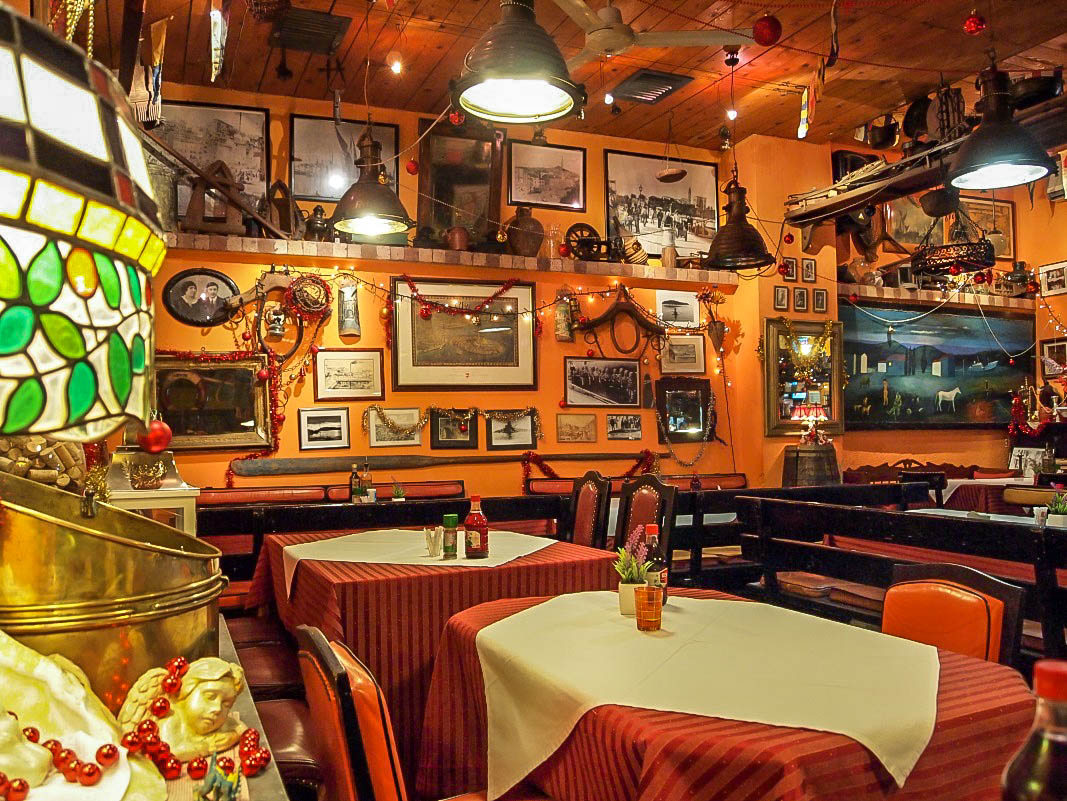
The restaurant Veli Jože is situated in the street called Sv. Križa and is really easy to find. The restaurant got its name from a Croatian literary character- giant Veli Jože who lived near the city of Motovun. On summer days, we use to sit on the wooden banks on the terrace, eating seafood, enjoying local wine and a view of the street, the sea, or the passers-by. The interior of the restaurant is charming- overcrowded with pictures, photos, musical instruments, boat parts, antique objects, useless things, old Christmas decorations… It looks like someone poured out flea market all over the place!

For a dessert, we usually go to a bar on the "Trg Marsala Tita" square which serves tasty chocolate cake and which we discovered by accident once- on a cold, rainy day, looking for a place to warm up.

Veli-Joze-Rovinj
Chocolate-dessert

From there, we head to the boardwalk (in Croatian “riva”) to observe the boats, which is especially interesting in the summer months, when beautiful sailboats and yachts dock in the marine.

As the evening approaches, the “riva” becomes a hustling and bustling place, a central happening in the city, where tourists and locals come to see and be seen, the children to play and eat ice cream and the traders to sell day trips and knickknacks.

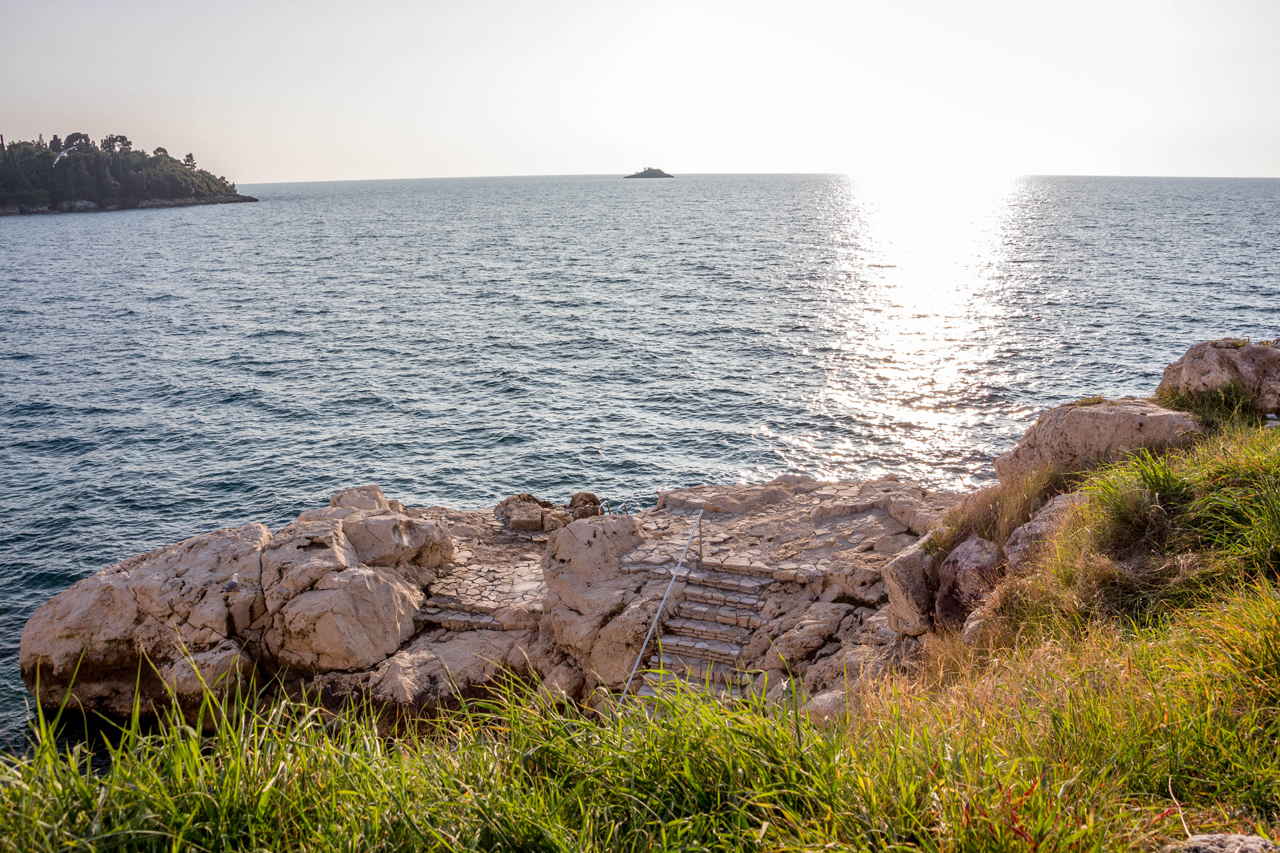
From Rovinj, you can make a day trip to the nearby islets of St Catherine and St Andrew- they are nice for bathing and soaking up the sun, but there are also concerts in open being held occasionally on St Andrew, which is a lovely experience.

Roinj-fishing-port
Rovinj-Sunset
The island of Sv Katarina in sunset

The island of Sv Katarina in sunset

When visiting Croatia, don’t miss the opportunity to take a walk through Rovinj’s pebble streets and admire its colorful houses and beautiful seaviews- I’m sure you’ll love it. If you’ve already been to Rovinj or plan to visit, please share your thoughts in the comments below!


Numerous reasons to visit Sicily... for those who are still hesitating!


Sicily is a place that can't be described in one short post, especially if you have enough time to indulge in its cultural, natural and culinary richness. That's why I've already wrote two blog posts about our Sicilian adventure, and it seems to me now that there's more to come! :)

After a few lovely days spent in the valley of baroque towns, we headed to another famous Sicilian valley, the one of the Temples (or in Italian, Valle dei Templi) to discover ancient history of the island.

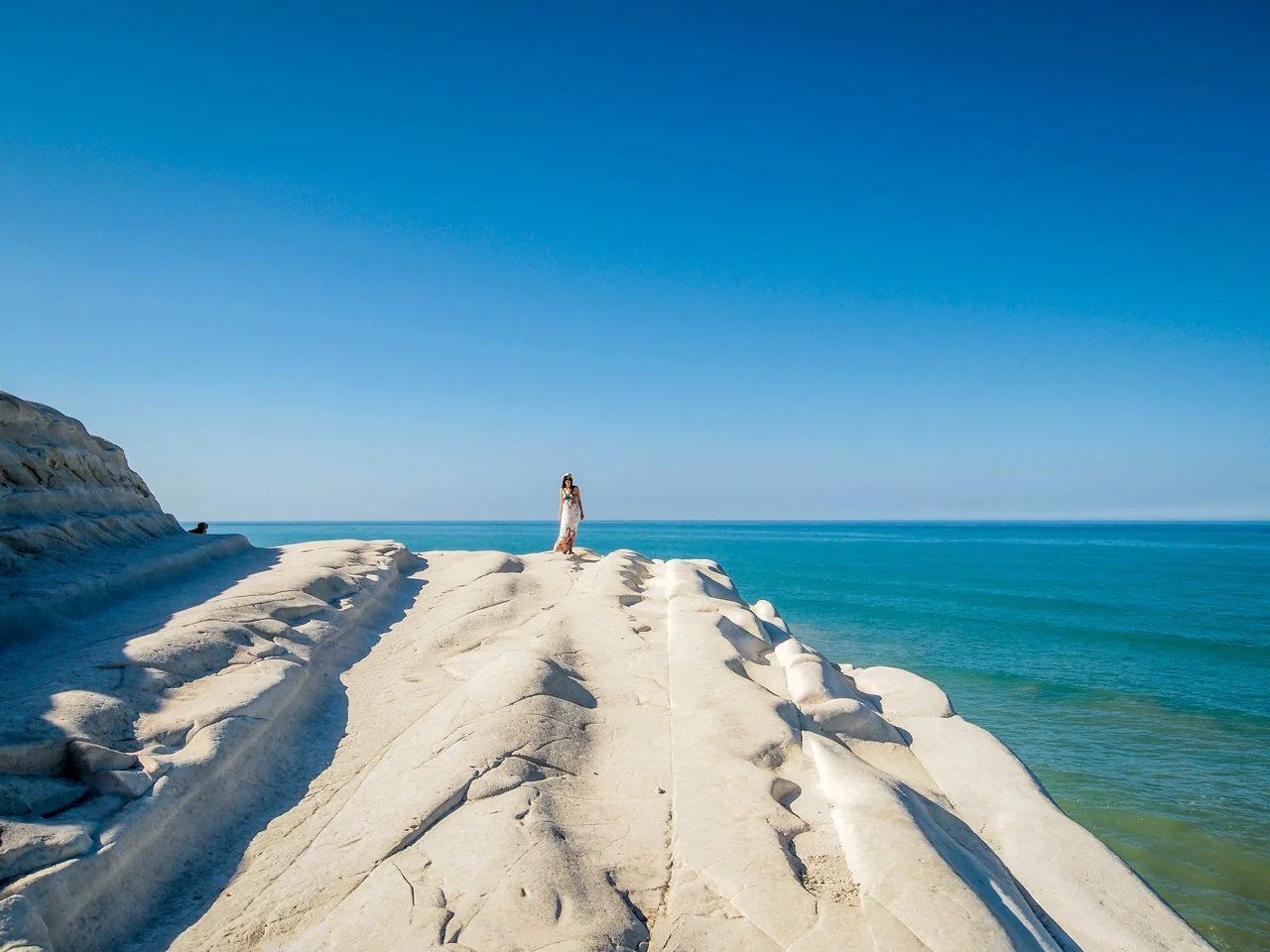
White cliffs of Scala dei Turchi near Agrigento

White cliffs of Scala dei Turchi near Agrigento

The city of Agrigento was founded by Greeks in the 6th century BC on a plateau overlooking the sea and olive groves and was then known by the name of Akragas.  According to UNESCO, it was one of the greatest Mediterranean cities of ancient world, and thanks to the extraordinary condition of preserved temples, it is today a protected site.

Valle dei Templi with it's ancient olive groves

Valle dei Templi with it's ancient olive groves

We approached Agrigento by car, struggling to find our accommodation, navigating in circles through narrow, one-way streets of the city on the hill. Next morning we woke up early to avoid the unbearable sun beams while visiting the white cliffs of Scala dei Turchi and the temples of Valle dei Templi.

Taking a walk on Scala dei Turchi

Taking a walk on Scala dei Turchi

I have to admit that I expected more from Scala dei Turchi (translated “Stair of the Turks”) which looked so tempting on all the photos and postcards. I don’t wan’t anyone to get the wrong impression- the white cliffs are peculiar and interesting, but not as big and impressive as I imagined, and the turquoise sea seen from the distance was pretty muddy because of the waves that raised up the sand. We sat on the warm cliffs as long as the rising sun allowed us to, took a walk on the sandy beach and then headed back to see the temples.

Temple of Hercules in Agrigento

Temple of Hercules in Agrigento

Temple of Concordia in Agrigento

Temple of Concordia in Agrigento

The site is amazing- the Greek town of Akragas landed on a hilly landscape with a view of turquoise sea, and is today surrounded by ancient olive groves. The temples were built in Doric Order, the most simple and the most massive one of three Greek orders (Doric, Ionic and Corinthian). They look impressive in their simplicity and proportion on the background of clear blue sky, as they must have looked 27 centuries ago.

Bougainvillea blossom in Valle dei Templi

Bougainvillea blossom in Valle dei Templi

Temple of Juno in Agrigento

Temple of Juno in Agrigento

Before heading to Palermo we decided to stop at Sciacca, charming fishing port and the so called “city of ceramics”.

The city wasn’t as pretty as medieval Cefalù or romantic Taormina, but it had a laid-back atmosphere, artistic vibe and the terraced main square overlooking the sea and the port dotted with fishermen’s boats. I found out later that the city hosts one of the most frequented carnivals on Sicily and is known for its spas- so there are few good reasons to visit!
The view of the port from the main square of Sciacca

The view of the port from the main square of Sciacca

Chiesa Madre in Sciacca

Chiesa Madre in Sciacca

One could spend quite a lot of time wandering through ceramics shops of Sciacca- we found one that had original pieces and a nice lady selling them, so we ended up buying a pile of beautiful souvenirs, and even visiting the workshop of the family producing them!

Lovely ceramic butterflies on the wall of a hallway in Sciacca

Lovely ceramic butterflies on the wall of a hallway in Sciacca

The road that connects southwestern Sicilian coast and Palermo passes through picturesque landscape of wavy golden hills, which we were able to enjoy thanks to the low traffic, mild afternoon sun that spread over the hills and a bunch of croissants filled with pistacchio cream given to us by our kind hostess in Agrigento!

Traffic in Palermo was a shock at first- as there are almost no rules and no safety distance in lines for Palermitan drivers, but we got used to it and just went with the flow (and also didn’t use our car till the day of our departure :) ).

Palermo is an assembly of historical layers with great architectural pieces and chaotic 20th century residential architecture, broad avenues and dirty side alleys, expensive fashion stores and and quirky farmers markets...

Chiesa della Martorana and Chiesa di San Cataldo in Palermo

Chiesa della Martorana and Chiesa di San Cataldo in Palermo

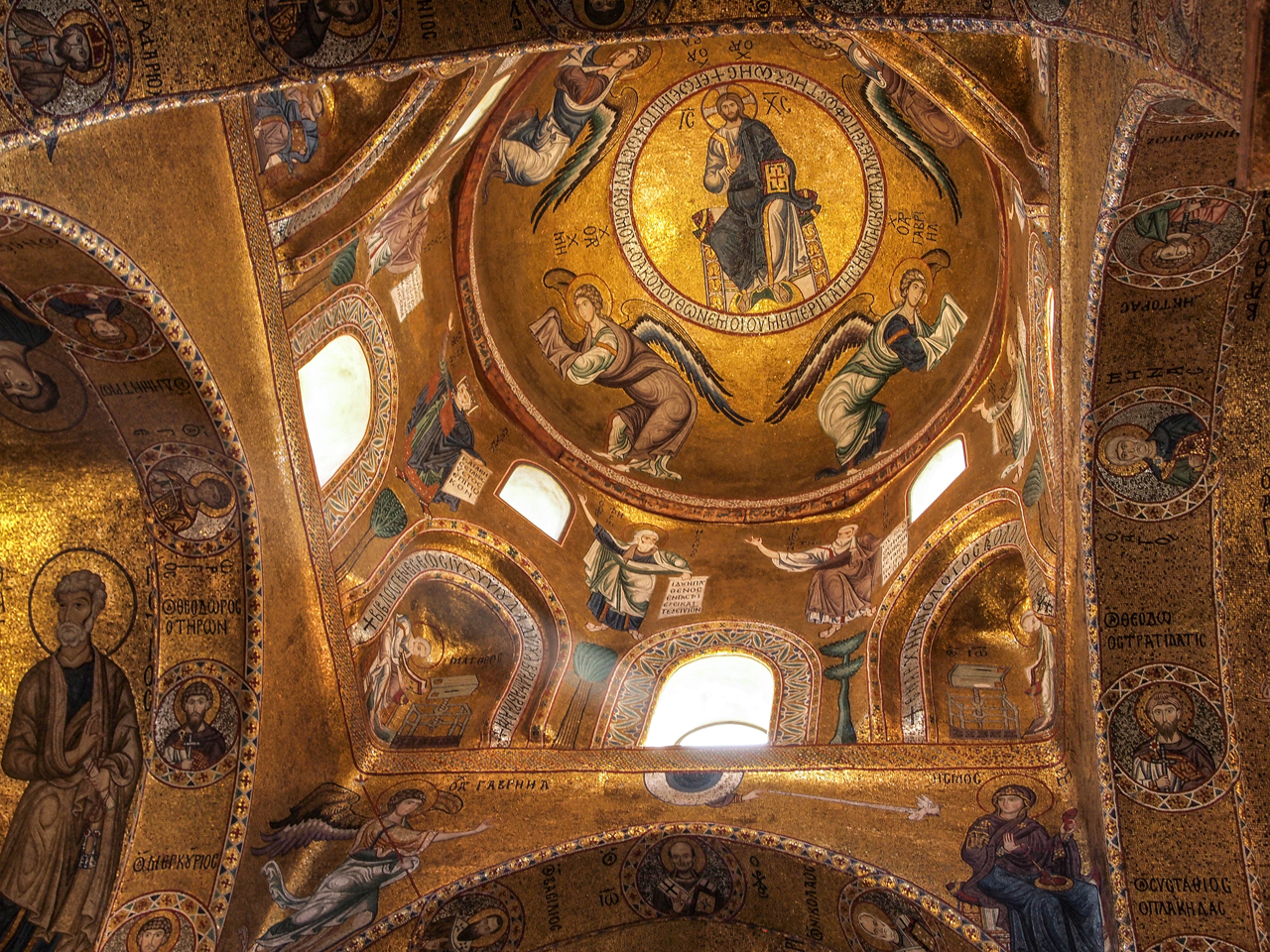
Byzantine mosaics in the interior of Chiesa della Martorana

Byzantine mosaics in the interior of Chiesa della Martorana

Chiesa di San Cataldo, Palermo

Chiesa di San Cataldo, Palermo

If you’re visiting Palermo there are some things not to be missed: Vucciria or Ballaro Markets with their abundance of colours, smells and sounds, complex architectural legacy inherited from all the invaders that once ruled the island, brioche con gelato which is a Palermitan specialty and locals say that you can’t leave without trying it, and getting to know the locals- their warm hospitality and spontaneity is really enjoyable. 

Chiesa della Martorana (depicted on the pictures above) is a wonderful example of architectural multiplicity, with its Byzantine mosaics, medieval bell-tower and baroque façade!

Baroque fountain Pretoria and medieval tower of Chiesa della Martorana

Baroque fountain Pretoria and medieval tower of Chiesa della Martorana

The Cathedral of Palermo

The Cathedral of Palermo

Tasty lunch in a bar popular among students (we can understand why!)

Tasty lunch in a bar popular among students (we can understand why!)

Our last night on Sicily was a cherry on top to this wonderful trip- we tried out a restaurant in Palermo that served some insanely good seafood dishes, all of them fresh and local, of course! The staff were so friendly and kind- they invited us to see a bucket of fresh lobsters that had just arrived, and talked with us about the differences between Croatian and Italian seafood cuisine!

Although our trip came to an end in Palermo, I am going to write two more posts about Sicilian cuisine, as I am obviously excited about everything we’ve seen and tasted there, and can’t wait to go back and explore this astonishing land further.